

TREATMENTS
Lumbar decompression
A lumbar decompression is performed for trapped nerves. The aim of the operation is to remove the compressive elements that are compressing the nerves of the spine. This may be caused by bone, ligaments or even parts of discs.
The patient usually presents with progressive pain on standing and activity which improves with rest. They will also have progressive weakness and a feeling of their legs giving way under them. This is because the compression of the nerves leads to dysfunction of these nerves.
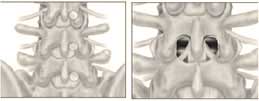
The aim of this procedure is to remove the compression with as simple and minimally invasive an approach as possible without causing the spine to become unstable. When the lamina (see the section Anatomy of the Spine) is completely removed, it is called a laminectomy and when the lamina is only partially removed, it is called a laminotomy. If the decompression needs to be more complex, a fusion procedure might be required to stabilise the spine.
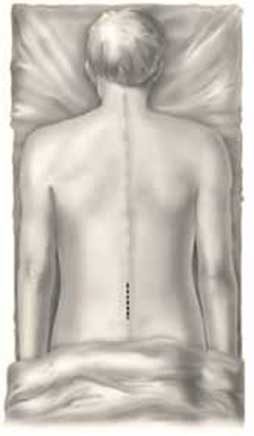
When undergoing this operation, you will be lying on your stomach on bolsters or pillows during your procedure.
Your specialist will make a small cut along your spinous processes. The length of the incision depends on various factors such as patient size, the number of spinal levels involved and your specialist’s preference. The length of the incision is actually of little consequence with regard to the success of the operation.
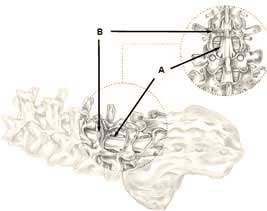
The soft tissue and muscles that are attached to the vertebrae are then stripped away by means of a combination of electrosurgical cautery (a blade that cuts with an electrical current) and dissecting instruments. All the compressive bone, ligaments and disc fragments are then removed and the nerves probed to make sure that they are not restricted in the spinal canal and in the foramina through which they exit the spinal canal. If there are sufficient structures left to allow it, your specialist might place a spacer between the spinous processes of the adjacent vertebrae to keep the spinal canal open which allows the nerves more space. Thereafter the wound is stitched up.
Ward care
You would be expected to get out of bed quite soon and usually on the first day following surgery. You may usually walk around as much as you want depending on the stability of your spine. Your specialist will advise you about this. You should take care and not sit for too long or on a seat that is very low. This is to prevent you from placing too much strain on your lower back. Most specialists recommend a duration of 30 minutes or less of sitting at a time.
Discharge
You would normally be discharged at about five to ten days after surgery, depending on the degree of pain and disability you are experiencing and on the absence of any complicating wound factors or concern about your general health at the time.
The hospital staff will assist you in obtaining your follow-up consultation bookings, the prescribed analgesics to take home, the sick leave-certificate to be provided by your doctor and the instructions regarding wound care provisions in the post-operative period.
Rehabilitation
It is incredibly important to get a lot of rest and exercise following your surgery. Do not try to rush back to work. It is important to walk for exercise and also exercise in conjunction with the guidelines from your physiotherapist. You may perform activities only as prescribed by your specialist. You should refrain from exercises that involve impact for at least three months. This would include jogging, mountain biking and equestrian pursuits.
Follow-up
Routinely you will receive a date for your follow-up appointment with your specialist. This may vary from anything between two and six weeks, but you will be seen earlier if there are any complications. In cases of spinal fusion you would usually undergo an X-ray of your back a few months after the operation to evaluate the bone growth between the two vertebrae; this is covered in the chapter Lumbar Fusion. It is important that this bony growth takes place, otherwise the operation might have to be repeated.
It is important to realise that you will have to protect your back for the rest of your life and apply good back habits (see the section Caring for your Spine).


TREATMENTS
TREATING BACK PAIN
Back Care
Back Care
People who have spinal problems have them because of a genetic tendency or susceptibility they have towards spinal disease. The spinal column is one organ and people who have lower back problems frequently will develop, or at the same time have neck problems. Spinal surgery should be reserved for nerve compression and intractable pain that impairs a patients everyday life and functionality substantially. Spinal surgery changes the biomechanics of the spine and frequently leads to further spinal surgery. The mainstay in the treatment of back pain therefore is prevention. This chapter aims to explain how to go about putting as little strain on your spine as possible.
Read MoreTREATING HEADACHES
Headache Care
People who have spinal problems have them because of a genetic tendency or susceptibility they have towards spinal disease. The spinal column is one organ and people who have lower back problems frequently will develop, or at the same time have neck problems. Spinal surgery should be reserved for nerve compression and intractable pain that impairs a patients everyday life and functionality substantially. Spinal surgery changes the biomechanics of the spine and frequently leads to further spinal surgery.
Read MoreTREATING PELVIC PAIN
Pelvic Care
People who have spinal problems have them because of a genetic tendency or susceptibility they have towards spinal disease. The spinal column is one organ and people who have lower back problems frequently will develop, or at the same time have neck problems. Spinal surgery should be reserved for nerve compression and intractable pain that impairs a patients everyday life and functionality substantially. Spinal surgery changes the biomechanics of the spine and frequently leads to further spinal surgery.
Read MoreTREATING FACIAL PAIN
Facial Care
People who have spinal problems have them because of a genetic tendency or susceptibility they have towards spinal disease. The spinal column is one organ and people who have lower back problems frequently will develop, or at the same time have neck problems. Spinal surgery should be reserved for nerve compression and intractable pain that impairs a patients everyday life and functionality substantially. Spinal surgery changes the biomechanics of the spine and frequently leads to further spinal surgery.
Read MoreCONTACT US
This is not an actual appointment form. The below form is to request an appointment,
we will get back to you to confirm if the requested date and time is available.
Have more questions? Feel free to get in touch.