

TREATMENTS > TREATMENT FOR NECK PAIN
Cervical nerve root block
A cervical nerve root block is performed for pain that is caused by an irritated nerve root. The aim of the procedure is to reduce the inflammation of the nerve root and also block the pain impulse from travelling up the nerve to the brain. This will then bring partial or complete (but temporary) relief of the pain.
The reason why your specialist performs this procedure is to first of all correctly diagnose whether this nerve root is causing the pain that is felt in the arm and secondly to bring temporary relief from the pain. It is the usual practice to use a mixture of long-acting local anaesthetic and steroids when injecting around the nerve root.
The local anaesthetic solution brings instantaneous relief of the pain, if it is indeed the nerve root that is responsible for the pain and serves as confirmation to your specialist that this is indeed the pathological level. The steroids reduce the inflammation and will provide longer-acting pain relief. This pain relief may be permanent in cases where the nerve compression is of a temporary nature. The nerve root block facilitates the normal recovery process of the nerve in cases where the compression is a temporary feature. This may be the case in a disc herniation.
In other cases where the foramen through which the nerve runs (see the chapter Anatomy of the Spine), is permanently obstructed by a disc fragment or because of a bony narrowing, the relief will only be temporary. The block will, however, serve to determine the level at which an operation should take place.
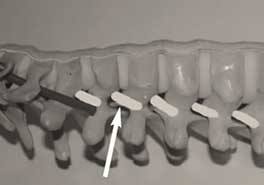
When undergoing this procedure, you will be lying on your stomach or on your back on bolsters or pillows. Your specialist will use an X-ray machine to guide the needle that is used to do the procedure with. The needle is placed directly into the foramen and a mixture of steroids and local anaesthetic is injected into the foramen and around the nerve. This procedure can also be performed on an out-patient basis under CT guidance by a radiologist.
Ward care
You may sometimes experience a bit of discomfort directly following the procedure, but this will clear up very soon. You will be allowed to move around freely after your procedure.
Discharge
This procedure is usually performed as a day procedure and you will be allowed to go home soon after your procedure.
Rehabilitation
It is incredibly important to get a lot of rest and exercise following your procedure. It is frequently useful to supplement your treatment with physiotherapy and local treatment such as massage therapy and chiropractic treatment. The nerve root block is both a test and a treatment. Neural stretch exercises are important to allow the nerve to mobilise freely in the foramen. Your physiotherapist will assist you with these.
Follow-up
Routinely you will receive a date for your follow-up appointment with your specialist. This may vary from anything between two and six weeks, but you will be seen earlier if there are any complications. It is important that you realise that you will have to protect your neck for the rest of your life.


TREATMENTS
TREATING BACK PAIN
Back Care
Back Care
People who have spinal problems have them because of a genetic tendency or susceptibility they have towards spinal disease. The spinal column is one organ and people who have lower back problems frequently will develop, or at the same time have neck problems. Spinal surgery should be reserved for nerve compression and intractable pain that impairs a patients everyday life and functionality substantially. Spinal surgery changes the biomechanics of the spine and frequently leads to further spinal surgery. The mainstay in the treatment of back pain therefore is prevention. This chapter aims to explain how to go about putting as little strain on your spine as possible.
Read MoreTREATING HEADACHES
Headache Care
People who have spinal problems have them because of a genetic tendency or susceptibility they have towards spinal disease. The spinal column is one organ and people who have lower back problems frequently will develop, or at the same time have neck problems. Spinal surgery should be reserved for nerve compression and intractable pain that impairs a patients everyday life and functionality substantially. Spinal surgery changes the biomechanics of the spine and frequently leads to further spinal surgery.
Read MoreTREATING PELVIC PAIN
Pelvic Care
People who have spinal problems have them because of a genetic tendency or susceptibility they have towards spinal disease. The spinal column is one organ and people who have lower back problems frequently will develop, or at the same time have neck problems. Spinal surgery should be reserved for nerve compression and intractable pain that impairs a patients everyday life and functionality substantially. Spinal surgery changes the biomechanics of the spine and frequently leads to further spinal surgery.
Read MoreTREATING FACIAL PAIN
Facial Care
People who have spinal problems have them because of a genetic tendency or susceptibility they have towards spinal disease. The spinal column is one organ and people who have lower back problems frequently will develop, or at the same time have neck problems. Spinal surgery should be reserved for nerve compression and intractable pain that impairs a patients everyday life and functionality substantially. Spinal surgery changes the biomechanics of the spine and frequently leads to further spinal surgery.
Read MoreCONTACT US
This is not an actual appointment form. The below form is to request an appointment,
we will get back to you to confirm if the requested date and time is available.
Have more questions? Feel free to get in touch.